Sensors5 min read• 15 Jan 2025
Flush vs Non-Flush Proximity Sensors: Which One Should You Choose?
What are Flush and Non-Flush Sensors?
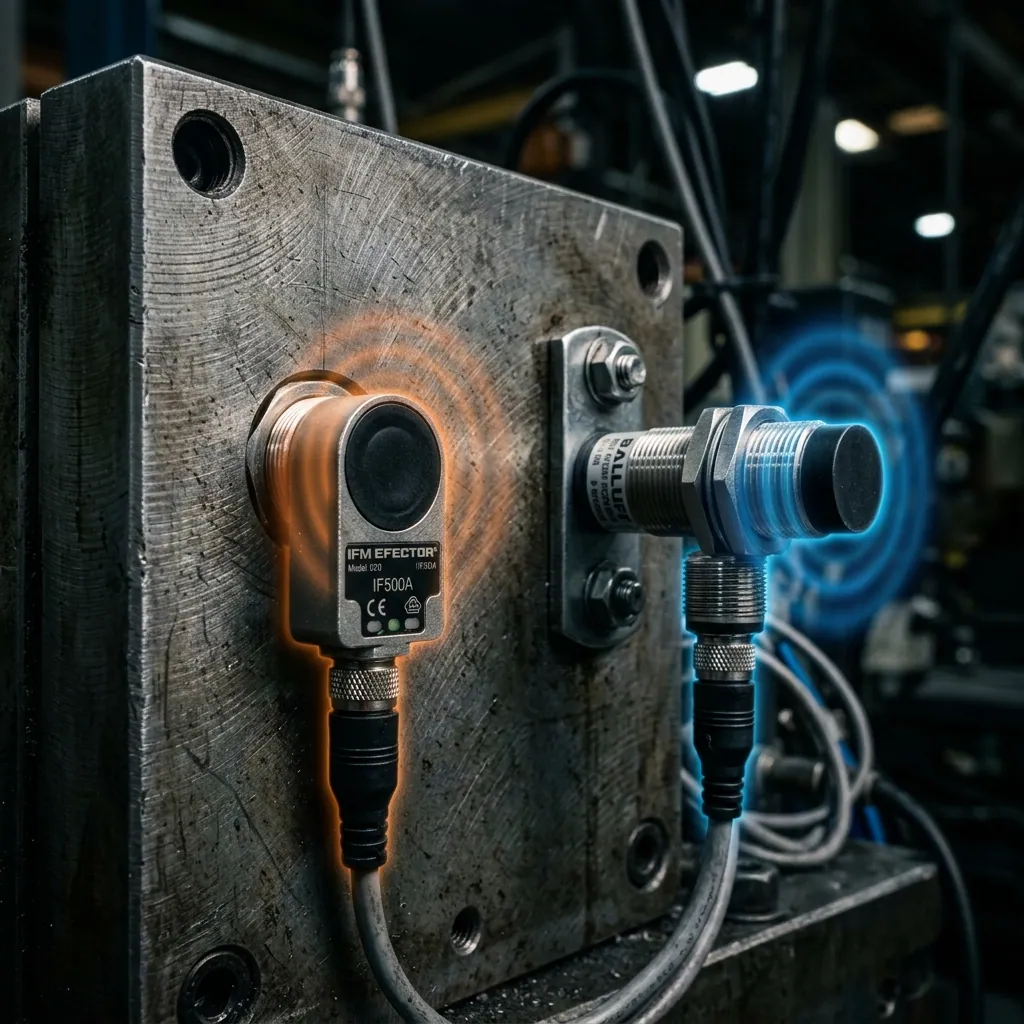
Flush (Shielded) sensors can be mounted flush with the metal surface. The sensing face is level with the mounting surface, making them ideal for tight spaces. However, they typically have a shorter sensing distance.
Non-Flush (Unshielded) sensors protrude from the mounting surface and have a larger electromagnetic field, giving them a longer sensing distance — typically 2x that of flush sensors of the same diameter.
Key Differences
| Feature | Flush | Non-Flush |
|---|---|---|
| Mounting | Level with surface | Protrudes from surface |
| Sensing Distance | Shorter (e.g., 2mm for M12) | Longer (e.g., 4mm for M12) |
| Side Sensitivity | Minimal | Higher |
| Best For | Tight spaces, metal surroundings | Maximum sensing range |
When to Choose Flush
- Mounting in metal brackets or housings
- Limited space applications
- When side-sensing interference must be avoided
- Conveyor belt position detection
When to Choose Non-Flush
- Maximum sensing distance needed
- Non-metallic mounting surfaces
- Object detection at greater distances
- Applications where sensor can protrude
Sri Vaarii's Range
We manufacture both flush and non-flush sensors in M8, M12, M18, and M30 sizes with NPN/PNP output options. All sensors are customizable — contact us for specific sensing distances or housing requirements.
Looking for reliable industrial solutions?
Explore our catalog of high-quality industrial components manufactured directly in Coimbatore, India.
View Product Catalogarrow_forward