M8 and M30 Proximity Sensors: Which Size is Right for Your Application?
Comparing the Extremes of Sensor Sizes
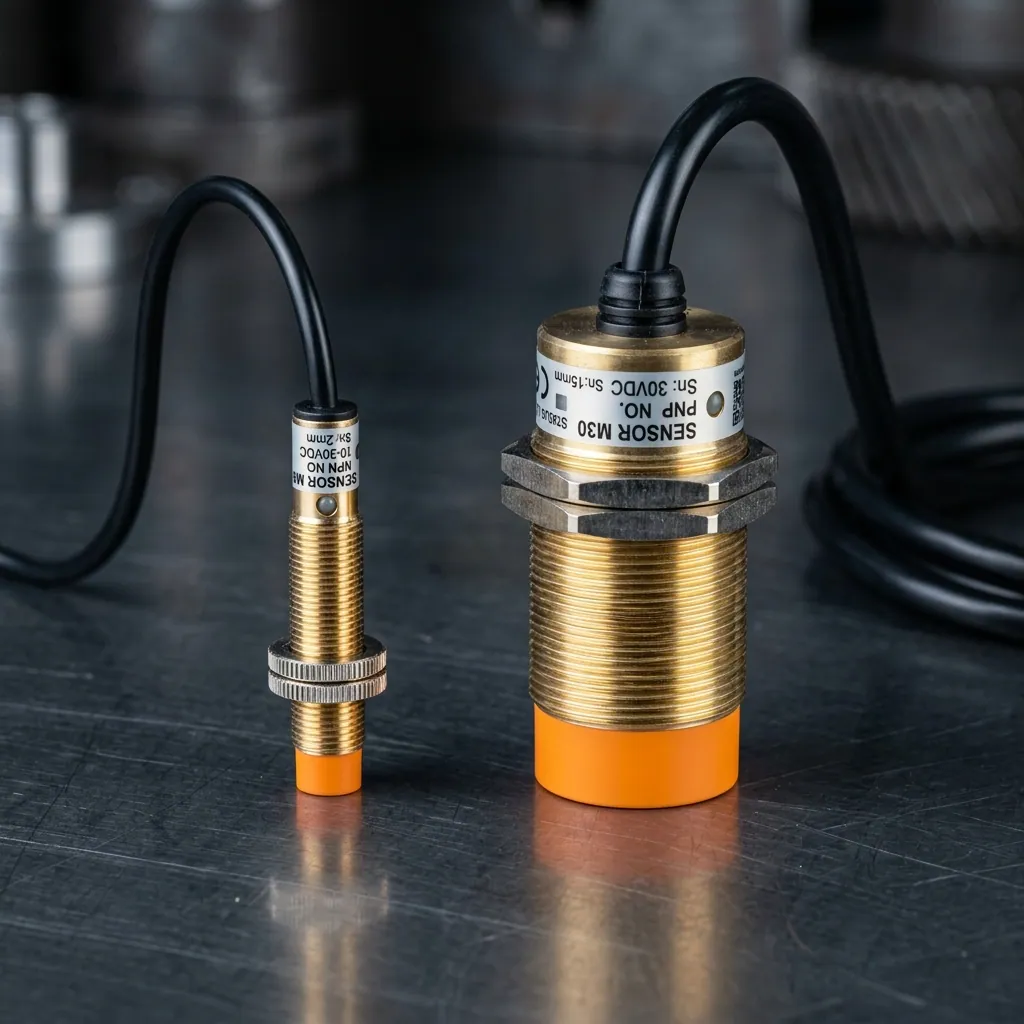
When selecting inductive proximity sensors, the thread diameter plays a massive role in both physical integration and sensing capabilities. While M12 and M18 are the industry standards, sometimes an application demands extreme compactness or maximum range.
This is where the M8 (8mm diameter) and M30 (30mm diameter) sensors come into play.
The Ultra-Compact M8 Sensor
The M8 sensor is designed for micro-automation and tight spaces.
Key Characteristics: - Sensing Distance: Very short (typically 1mm to 2mm). - Physical Size: Slender, lightweight, and unobtrusive. - Switching Frequency: Extremely fast (up to 2000 Hz or more), making it ideal for high-speed counting.
Best Applications for M8: - Robotics & End-of-Arm Tooling: Where weight and space are absolute premiums. - Precision Assembly Lines: Detecting small screws, pins, or metallic components on PCBs or watches. - Pneumatic Cylinder Positioning: Integrated directly into tight machine profiles.
The Heavy-Duty M30 Sensor
The M30 is the giant of standard cylindrical sensors, built for heavy industry and long-range detection.
Key Characteristics: - Sensing Distance: Very long (typically 10mm to 15mm, and sometimes up to 22mm for non-flush variants). - Physical Size: Massive, thick, and highly durable. - Switching Frequency: Slower (around 300 Hz to 500 Hz), as the large coil takes longer to energize and de-energize.
Best Applications for M30: - Heavy Machinery & Excavators: Detecting large metal parts like crane arms, bulldozer buckets, or mining equipment. - Conveyor Systems: Detecting large pallets, metal drums, or automotive chassis from a safe distance. - Harsh Environments: The large brass housing provides maximum protection against severe physical impacts.
The Verdict
Choose the M8 when space is your primary constraint and you need to detect tiny targets at high speeds. Choose the M30 when you need maximum sensing distance to keep the sensor safely away from heavy, moving targets.
Looking for reliable industrial solutions?
Explore our catalog of high-quality industrial components manufactured directly in Coimbatore, India.
View Product Catalogarrow_forward