Shielded vs. Unshielded Sensor Cables in High-Noise Environments
The Invisible Enemy of Automation
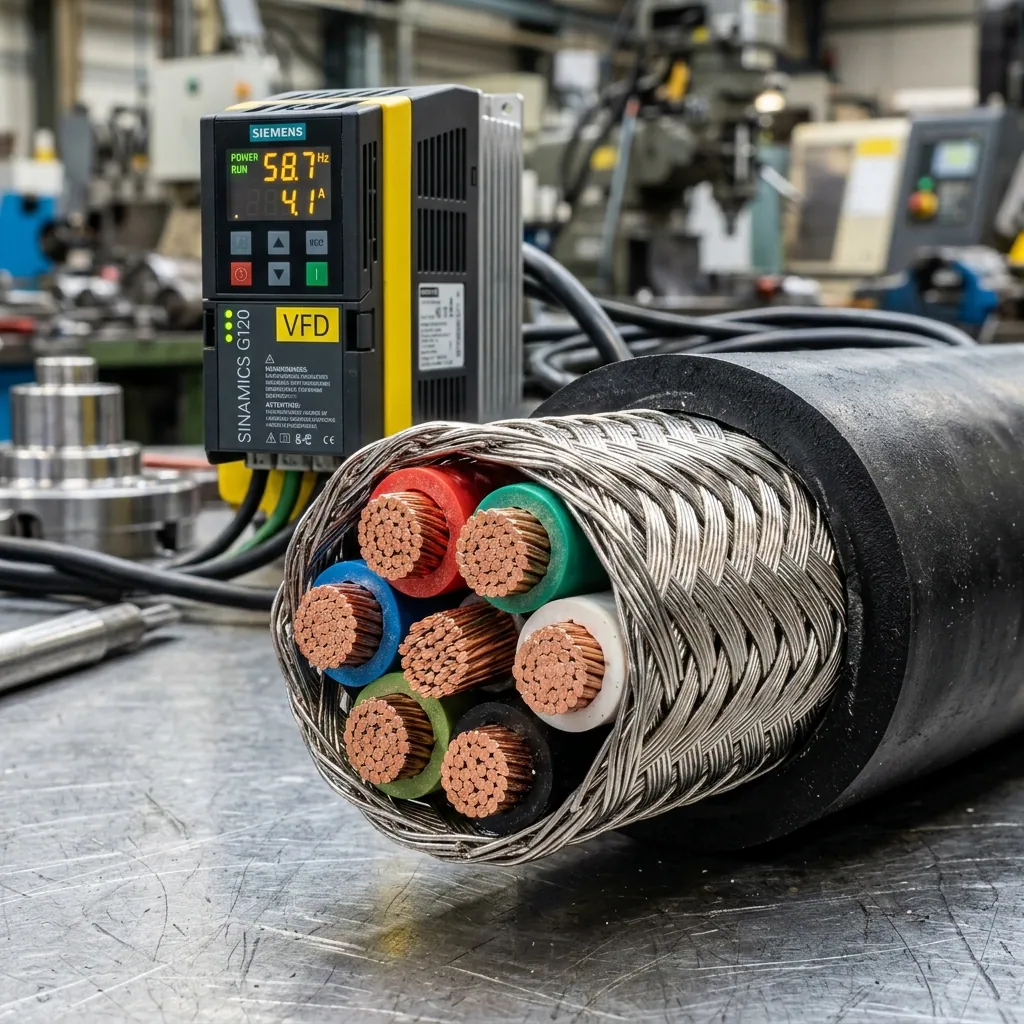
You have installed a brand new inductive proximity sensor. The wiring is perfect, the PLC logic is flawless, but the machine is acting erratic. The sensor seems to be triggering randomly when no metal is near it, causing the PLC to jam the assembly line.
If this is happening, you are likely the victim of Electromagnetic Interference (EMI).
What Causes EMI on the Shop Floor?
Modern factories are incredibly "noisy" environments, electrically speaking. The biggest offenders are: - Variable Frequency Drives (VFDs): These chop up voltage at high frequencies to control motor speed, radiating massive amounts of electrical noise. - Large AC Motors: When they start or stop, they create massive magnetic fields. - Welding Equipment: Arc welders dump huge voltage spikes into the surrounding air and power lines.
If a standard, unshielded sensor cable is routed too close to these noise sources, the cable acts like a radio antenna. It absorbs the EMI, inducing phantom voltages into the sensor's signal wire. The PLC interprets these noise spikes as actual sensor triggers, leading to chaos.
The Solution: Shielded Cables
A shielded sensor cable features a tightly braided metallic mesh (usually tinned copper) that wraps entirely around the inner signal and power wires, sitting just beneath the outer PVC/PUR jacket.
How it works: The braided shield acts as a Faraday cage. When high-frequency EMI strikes the cable, the shield catches the interference and carries it safely to ground, completely protecting the fragile 24V DC sensor signals inside.
Best Practices for Installation
Even with a shielded cable, proper installation is critical:
1. Ground the Shield Correctly: The shield must be connected to a clean Earth ground, typically at the panel (PLC) side only. Do not ground both ends, as this can create a "ground loop" that actually makes interference worse. 2. Cable Routing: Never run sensor cables in the same wire duct as high-voltage motor cables or VFD output cables. Always cross high-voltage and low-voltage cables at 90-degree angles. 3. Specify from the Start: If you know your machine will utilize VFDs or be placed in a heavy fabrication shop, specify shielded sensors from day one.
Sri Vaarii Automatiion offers shielded cable variants across our entire proximity sensor range, ensuring your automation logic remains flawless no matter how noisy the environment gets.
Looking for reliable industrial solutions?
Explore our catalog of high-quality industrial components manufactured directly in Coimbatore, India.
View Product Catalogarrow_forward